What Using AI Actually Looks Like in Equipment Dealership Operations
Ask ten equipment dealers what AI is and you'll get ten different answers. Some picture a chatbot like ChatGPT. Most decision-makers picture a list of vendors they've spoken with who can't quite explain what their "AI-powered" product actually does.
The reality is less dramatic and a lot more useful. For equipment dealers, the benefit is a distinct set of improvements showing up across the workflows your team already runs: appraisals, quoting, inventory, equipment invoicing. Each stage becomes a little faster, a little more accurate, a little less manual.
Here's what that can look like in real dealership workflows with the right tools.
Trade appraisals
Appraising an equipment trade is part valuation, part judgement, and part manual input. The judgement still belongs to the dealer. The valuation and input steps are where AI can measurably improve efficiency:
- Serial Number capture. A rep snaps a photo of the serial plate. AI reads it, decodes the model, and pulls back equipment details, eliminating transcription errors.
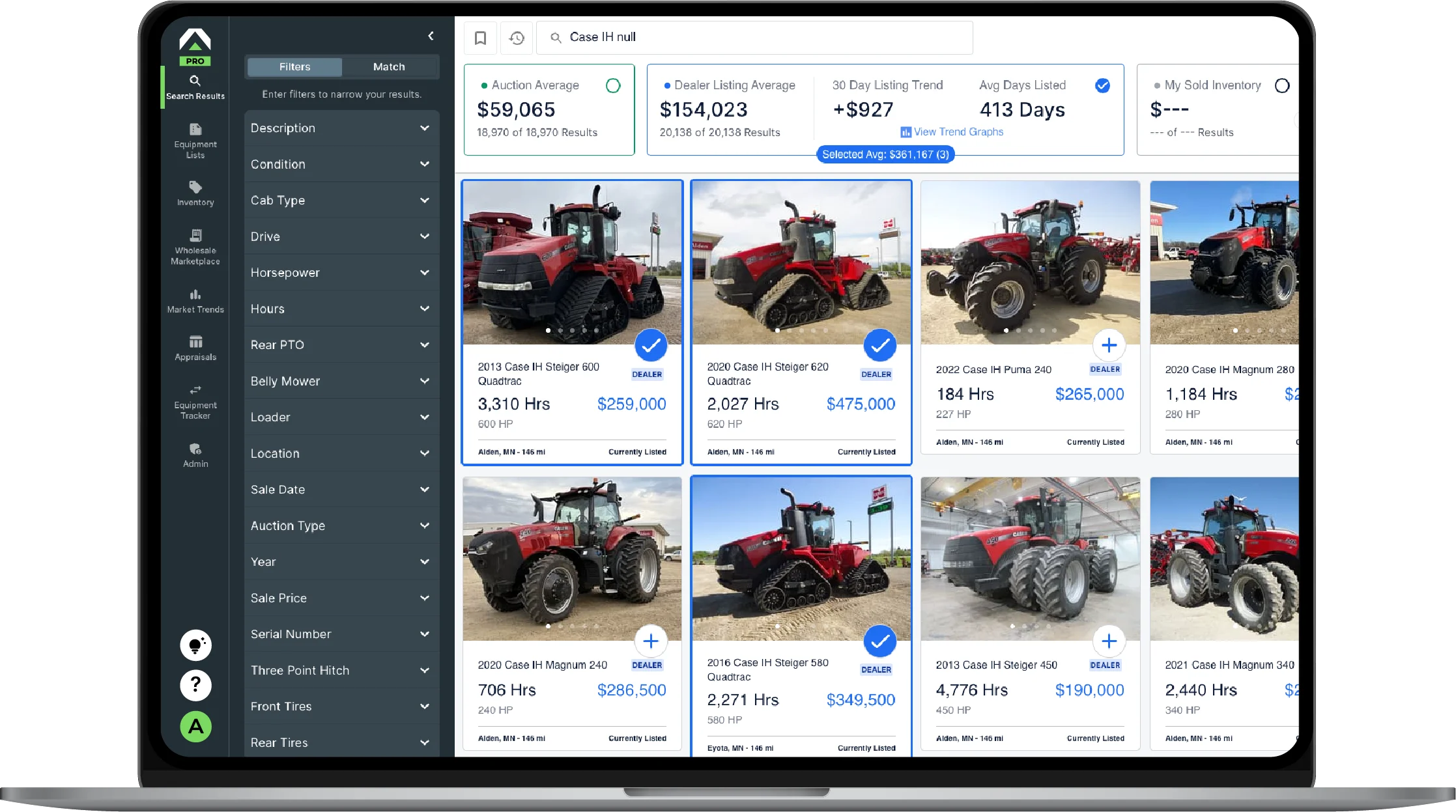
- Comparables-driven valuation. AI finds the most comparable recently-sold units across our auction and dealer transaction history, shows which ones and gives you a confidence score.
- Inputs that you control. Weight regional comps more heavily, narrow by horsepower class — and watch the value change in real time.
A trade appraisal that used to take 30 minutes now only takes a few.
Quoting and pricing equipment
Pricing decisions at an equipment dealership used to depend on who had the best memory. The senior rep who'd been around twenty years knew what a used 8R should sell for in July. Pricing guides have come a long way in recent years, but only recently has AI made that knowledge instantly accessible and transferable.
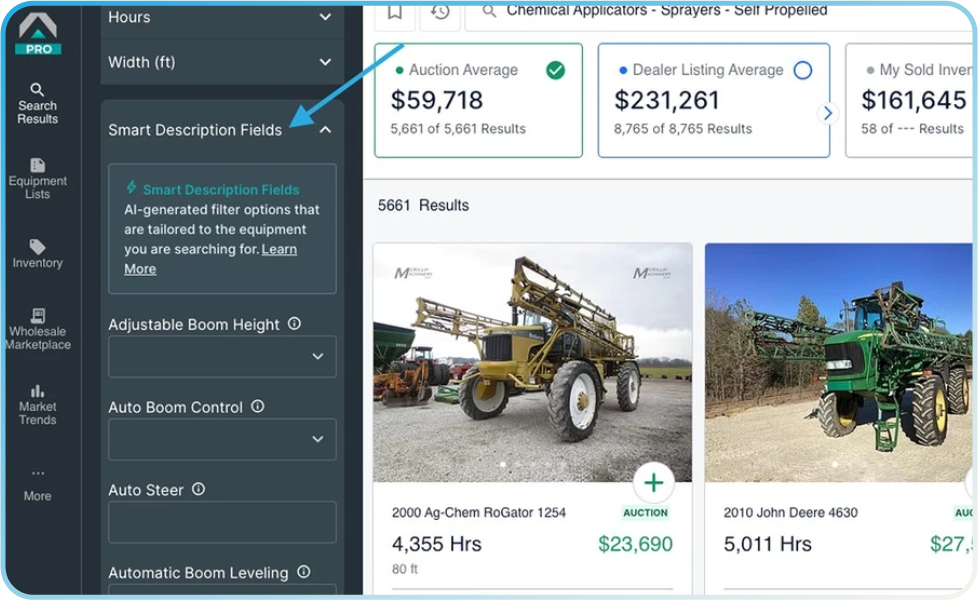
Here's how dealers use AI to price used equipment today: equipment valuation software like Tractor Zoom Pro draws on years of transaction data to recommend prices grounded in actual market activity rather than gut feel or whatever the previous guy listed it at. Smart Descriptions pull the features that matter from raw listings (hours, attachments, condition) so the comparables are apples-to-apples.
And because the system shows its work, your team can sanity-check the result instead of taking a black-box number on faith.
Inventory management
The bigger your lot, the harder it is to know what to focus on. AI changes the question from "what should I do today?" to "where will an hour of my time produce the most return?" Three places AI tools can help:
- Repricing inventory. AI flags units whose list price has drifted out of line with the market — too high and not moving, or too low and leaving money on the table. You reprice when the data says it matters, not on a fixed schedule.
- Time-on-lot predictions. Years of transaction data tell you which units will sell in the next six months and which won't. Slow movers surface automatically.
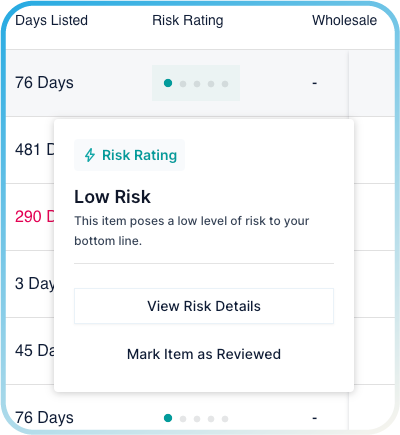
- Inventory risk rating. Each unit gets a numeric score synthesizing age, comparable performance, and market signals. A sales manager can scan 200 units and immediately know which ten need attention this week.
- Listing confidence score. Aggregated market valuations based on sold data gives you a score that indicates how likely your machine is to sell at the given list price, ensuring your numbers are in line with what the wider market is saying.
Most dealers don't expect AI to show up in inventory management, but this is where it quietly pays for itself, saving hundreds of hours a year.
Sold-not-invoiced and the post-sales workflow
Anyone who's worked an equipment dealership floor knows the SNI problem. A deal closes, the unit's gone, and the paperwork is partly in someone's email, partly in the DMS, partly on a desk. Until invoicing catches up, the deal isn't really done.
AI for dealers helps in two ways. First, it captures the data the system needs automatically: call notes, deal updates, contact activity. Second, it surfaces what's stuck, like deals that have closed but haven't moved through post-sales, units shipped but not invoiced, or follow-ups that should have happened three days ago. The right person gets pinged and follows up.
Solutions like Anvil Pro include an AI assistant that surfaces this data nearly instantly, closing the gap between closing and settlement and saving dealerships real money.
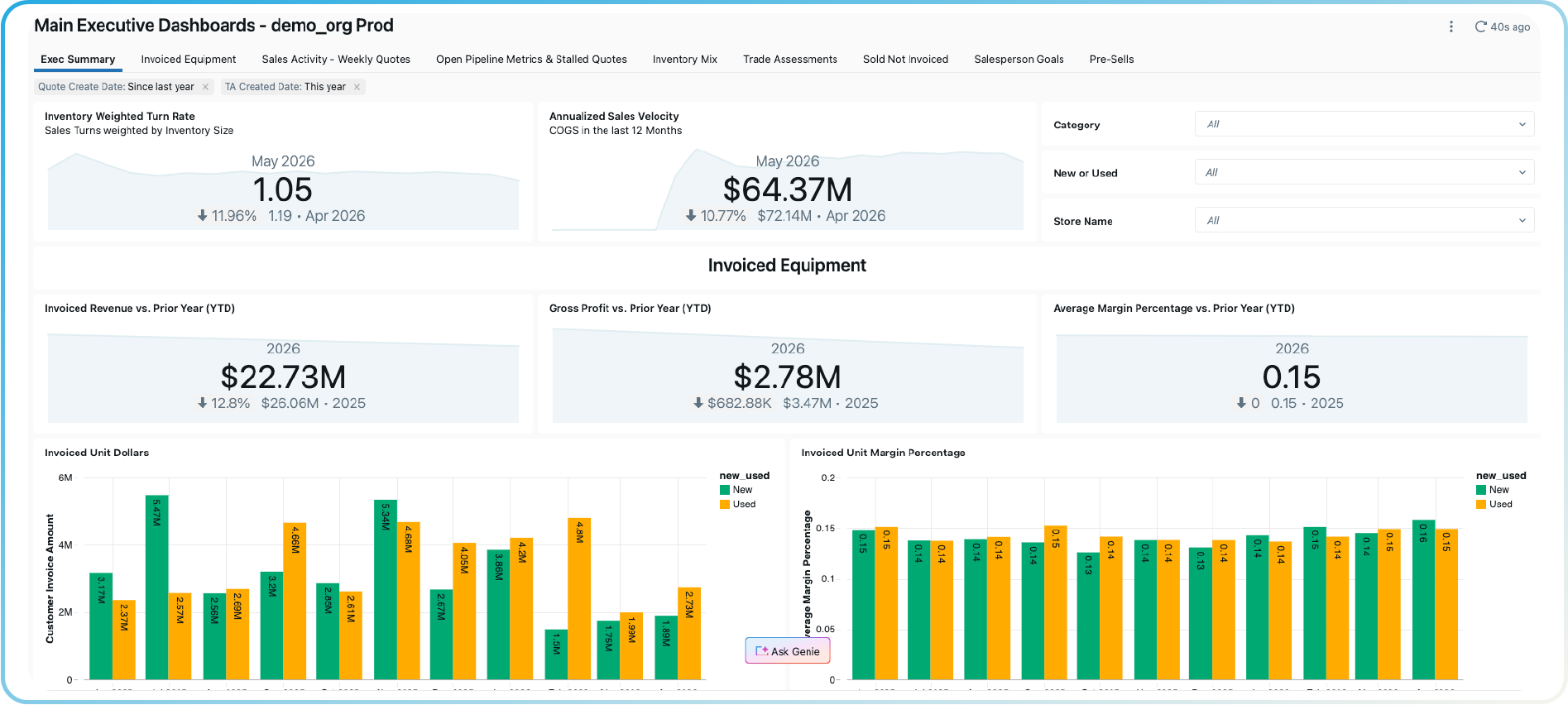
AI’s impact on equipment sales data and insights
The equipment dealers who get the most out of their data aren't the ones with the biggest data team. They're the ones who can ask their own questions and get answers back.
AI-powered sales analytics lets a sales manager type something like "Which customers in my territory bought a tractor in 2023 but haven't been contacted in 60 days?" and get an answer pulled from real data. No SQL. No exports. No waiting on someone else to build a report. The bottleneck stops being the report and starts being the question you think to ask.
What AI is not doing for your dealership
It's worth saying that none of these tech advances can replace the dealer-customer relationship. AI doesn't call the customer. It doesn't read body language at a trade show. It doesn't know that the guy who runs Jansen Farms always wants to talk hunting before he talks tractors. Those are crucial relationship-builders, and they're on you and your team.
What AI does is take on the busywork that pulls reps away from those conversations and quietly handle it.
See Tractor Zoom's approach to AI for a deeper look at how AI shows up across our products and how we think about putting it to work in equipment dealerships like yours. And take a closer look into a few of our AI-powered solutions for equipment dealers to see how Tractor Zoom is implementing the latest technology to tackle everyday hurdles in your quote, trade, pricing, and other workflows.

Join the future of ag & heavy equipment sales
Take a guided tour of Tractor Zoom Pro and Anvil Pro to discover how wider margins and faster turns are just a few clicks away.