Thinking About Dealership Software? Here’s What to Consider
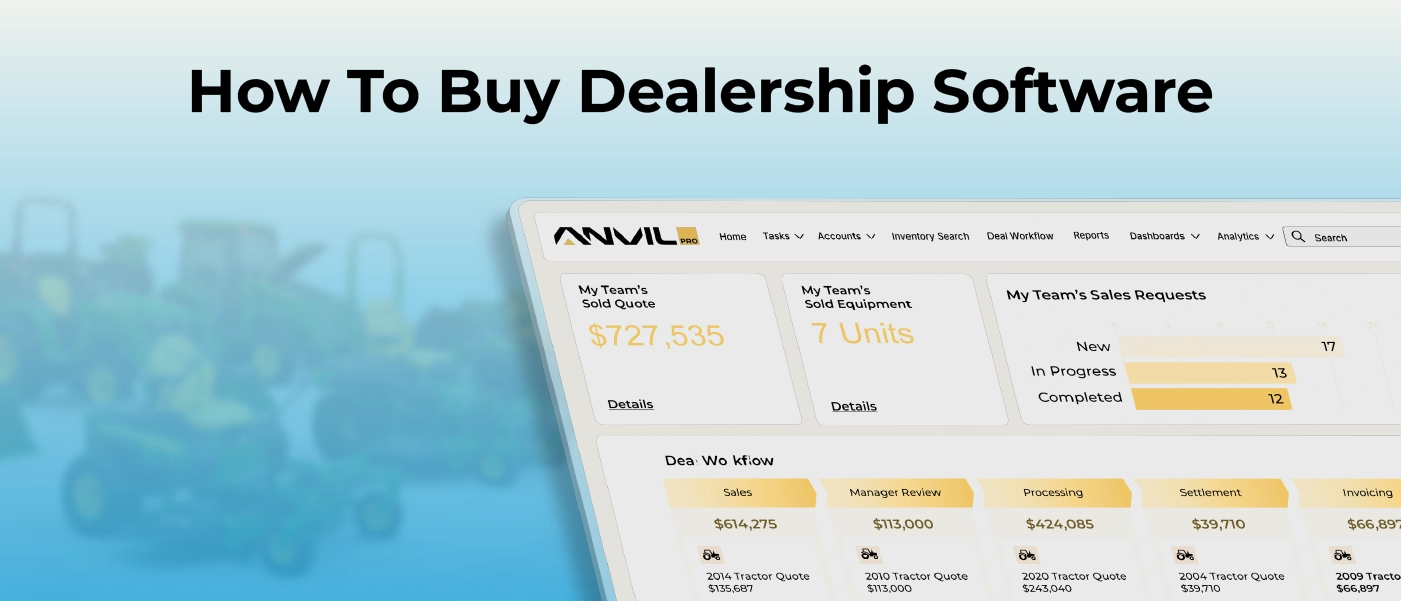
Does this sound familiar? You've sat through two or three software demos. The platforms all look pretty impressive. You've got a spreadsheet to compare quotes, a list of features to check off, and a deadline your GM is holding you to. You're being thorough by checking off all the bells and whistles that sound promising for your operation.
But there's a good chance you're evaluating the wrong things.
Equipment dealers who make successful software investments (the ones whose teams actually use the tools and see real returns) don't just shop for features. They evaluate the full picture: The people behind the tools, the process for getting live, and whether the product actually fits how their dealership operates. That last part might matter least of the three.
The most expensive mistake in software buying
You might guess that the most common purchasing mistake dealers make is “choosing the wrong platform.” But it usually lies in underestimating how much it takes to make any software work.
In reality, you're not just buying software. You're buying a change in how your sales team works every day. And this change doesn't happen because you signed a contract, but because someone at your dealership is accountable for driving it — and because the vendor you chose has a real plan to support it.
If your salespeople don't see a tech solution as something that helps them close more deals and make more money, they just won't use it. It doesn't matter how strong the feature set is. A CRM your team ignores delivers exactly zero return on investment.
So before you get deep into comparing pricing tiers and integration specs, ask yourself: Has this vendor demonstrated a concrete plan for getting my team to actually adopt this? If this isn’t an immediate “YES,” everything else is a distraction.
What you should actually be evaluating
The dealers who make the best software decisions tend to evaluate vendors across three areas:
The people
Who specifically will manage your implementation? What does your Customer Success Manager actually do, and how often will you hear from them after go-live? Do they employ real people who complete service requests and get back to you quickly?
Far too many vendors are your best friend during the sales process and then hard to reach after you sign. Know exactly who is in your corner before you commit, and understand what the handoff looks like from sales to onboarding to ongoing support.
The process
Can your vendor hand you a written implementation plan with real milestones and a realistic timeline, not a promise or vague verbal walkthrough?
Do they spell out what they'll need from your team and when? The implementation phase is where most software investments prove their value or quietly stall. "We'll figure it out once you sign" is not a plan.
The product
Once you've checked off the boxes on the first two questions, it’s time to dig into the tech solution itself. The right question here isn't simply "does it have this feature?" It's whether the software actually fits the way your dealership works.
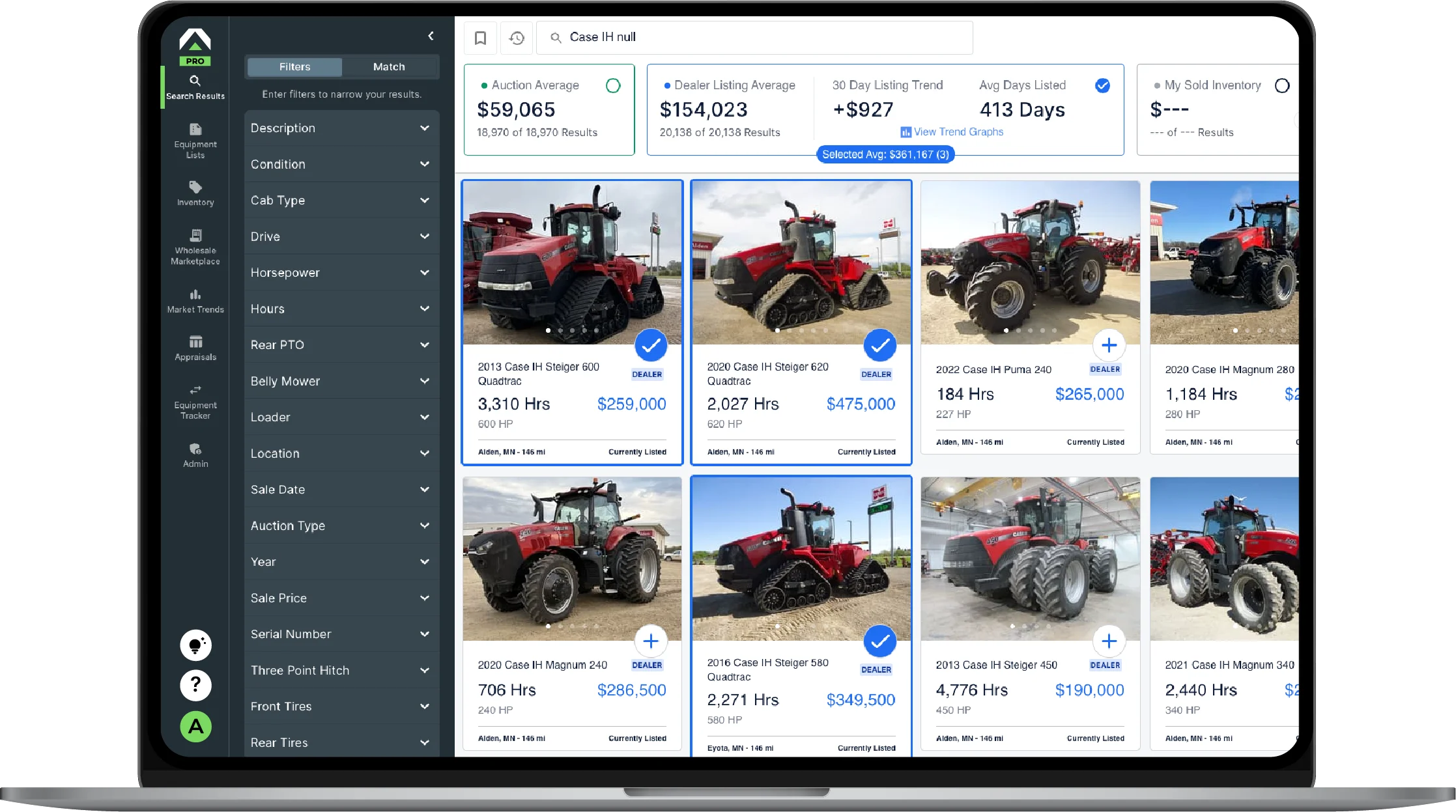
Does it consolidate quoting, appraisals, inventory, and deal management in one place, or does it just add another tool to a stack your team already ignores? Was it built for equipment dealers, or is it a generic CRM that someone adapted for your industry?
The question that separates the field
By the time you're comparing final quotes, you're probably talking to two or three vendors who all look pretty similar on paper. Here's one question that cuts through the noise:
"Walk me through the last few implementations you've done for dealerships like mine. What went well, what was hard, and what would you do differently?"
Every vendor who's been doing this for any length of time has had implementations that didn't go perfectly. This shouldn’t be seen as a red flag since any good system-connecting software got to where it is by a trial-and-error process.
What is more revealing is how they answer the question. A vendor who responds with specifics, owns the rough patches, and explains what they learned is showing you something real. A vendor who only repeats their feature list is showing you what happens after you sign.
Some common buying mistakes to avoid
Even experienced decision-makers fall into these traps when evaluating dealership software:
- Trying to recreate your current system in a new one. The goal isn't to digitize how you work today. It's to build the workflow your team should be running.
- Skipping the internal champion conversation. No vendor alone can drive adoption at your dealership. That has to come from someone on your team who owns it, and it should be done towards the beginning of your decision to buy.
- Letting urgency shortcut the process. A bad software decision costs far more (in time, money, and team morale) than a few extra weeks of research and conversations. Taking due diligence will pay off in the long run.
- Treating the demo as the whole evaluation. Demos show you what the platform can do under ideal conditions. The checklist questions you ask after the demo reveal what your actual experience will look like.
The checklist below is built to help you hold every vendor to the same standard across all the above elements (of people, process, and product) before you make a final call. Work through it before your next vendor conversation. The gaps it surfaces are worth knowing regardless of your final decision.
Download the Software Checklist

Join the future of ag & heavy equipment sales
Take a guided tour of Tractor Zoom Pro and Anvil Pro to discover how wider margins and faster turns are just a few clicks away.