

California AB 325: What Equipment Dealers Need to Know About AI Pricing Laws
.webp)
A new California law took effect January 1, 2026 that every equipment dealer should be aware of, whether you operate in California or not. California's AB 325 changes the legal landscape around AI-driven pricing software, and if your dealership is using tools that automatically recommend or set prices based on competitor data, your business could be exposed to significant legal liability.
At Tractor Zoom, we've been watching this development closely, and our outside legal counsel has reviewed AB 325 as it relates to our platforms. Because protecting our dealers isn't just something we say but something we do, we want to share what we've learned.
What AB 325 actually says
California AB 325 prohibits the use or distribution of what it calls a "common pricing algorithm. This is broadly defined as any methodology, including software or AI, used by two or more businesses that relies on competitor data to recommend, align, stabilize, set, or otherwise influence a price.
This definition might seem a bit unclear and wide in scope, and it is. It doesn't matter whether the competitor data being used is public or private, since there is no exception carved out for tools that rely solely on publicly available data, like advertised list prices scraped from competitor websites. If the software is using that data to push a price recommendation to your team, you may fall in that scope.
The law also makes it meaningfully easier for a buyer to initiate an antitrust lawsuit. And the financial stakes are real: Accompanying legislation raised maximum corporate fines to $6 million per violation, plus new civil penalties of up to $1 million per violation on top of existing remedies.
"But we don’t have stores in California" — Why that might not protect you
This is the part that catches dealers off guard. AB 325 doesn't just apply to California-based businesses. If any buyer in a transaction is located in California, that transaction may fall under California jurisdiction.
A dealer headquartered in South Dakota who uses an AI pricing tool across their locations could still face potential legal exposure if a California buyer challenges their pricing practices. Multi-location dealerships and large dealer groups are especially at risk given their geographic reach.
Moreover, AB 325 isn’t a one-off. New York and Connecticut have already enacted their own algorithmic pricing restrictions, and more states are expected to follow. Pricing software is increasingly viewed as a legal and compliance decision, not just a technology one.
What to watch for in your pricing software
The highest-risk scenario under AB 325 looks something like this: A software platform scrapes advertised list prices from competitor dealer websites, runs those figures through a pricing algorithm shared across multiple dealerships, and then spits out an exact recommended list price or booking value for your inventory.
If the pricing software you're using (or considering) does any of the following, it's worth a serious conversation with your legal counsel:
- Pulls competitor pricing data to generate price recommendations
- Sends automated alerts instructing your team to match competitor price drops
- Positions itself as an automatic repricing solution
- Markets itself by emphasizing that your competitors are using the same platform
That last point matters, since courts have flagged the shared use of a pricing platform among competitors as a factor that elevates antitrust risk.
Where Tractor Zoom Pro stands
Here's our position: Tractor Zoom Pro is designed to inform, not to prescribe.
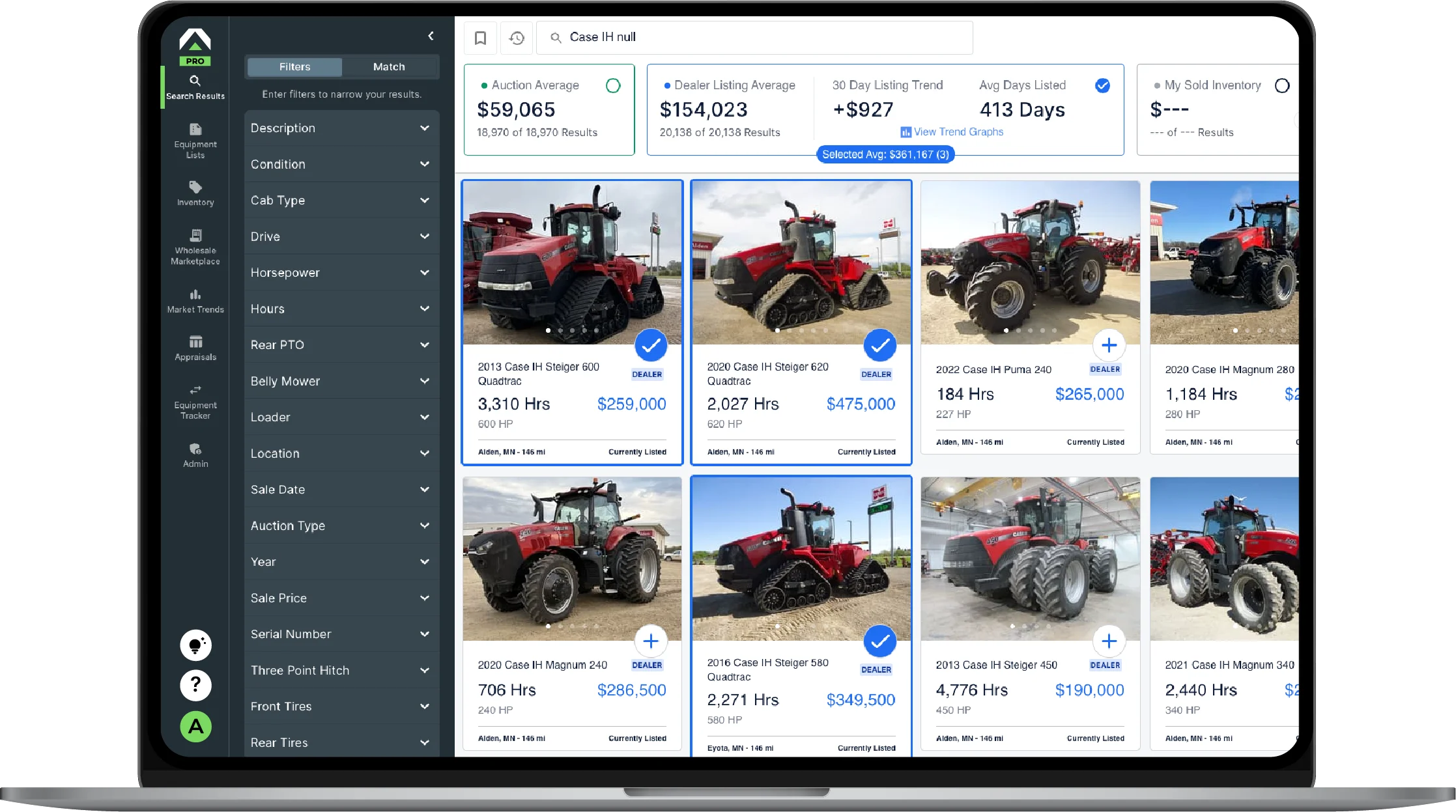
Our pricing platform is not prescriptive and is built on true, anonymized sold data, not scraped advertised list prices. When your team pulls a comparable in Tractor Zoom Pro, they're seeing what equipment actually sold for across our network, fully anonymized so no dealer can identify the source. That's a fundamentally different data foundation than what many newer tools are built on.
More importantly, Tractor Zoom Pro keeps the final pricing decision in the hands of your used equipment experts. We surface market context, but your team applies their expertise and judgment. That human-in-the-loop approach is a meaningful distinction under a law that draws an explicit line between tools that inform human decision-making and tools that replace it.
Our position is that Tractor Zoom Pro, as designed, does not increase your legal exposure under AB 325. That said, we always encourage dealers to conduct their own review with any legal resources they have access to, since every situation is unique and this law is still being interpreted by courts.
Have questions? We're here to help.
We know these developing legal details can feel like a lot to navigate. If you have questions about what this law means for your dealership, how Tractor Zoom Pro is approaching it, or what to look for when evaluating other tools in the market, reach out to our team directly. We're happy to walk through it with you.
And if you haven't taken a close look at Tractor Zoom Pro or Anvil Pro recently, we’d love to show you how our platform is built differently, and why that difference matters right now.
Disclaimer: This article is intended for informational purposes and does not constitute legal advice. We encourage all dealers to consult with their own legal counsel regarding AB 325 and any other applicable laws.

Join the future of ag & heavy equipment sales
Take a guided tour of Tractor Zoom Pro and Anvil Pro to discover how wider margins and faster turns are just a few clicks away.