.webp)
.webp)

Can Spray Drones Compete With Self-Propelled Sprayers?

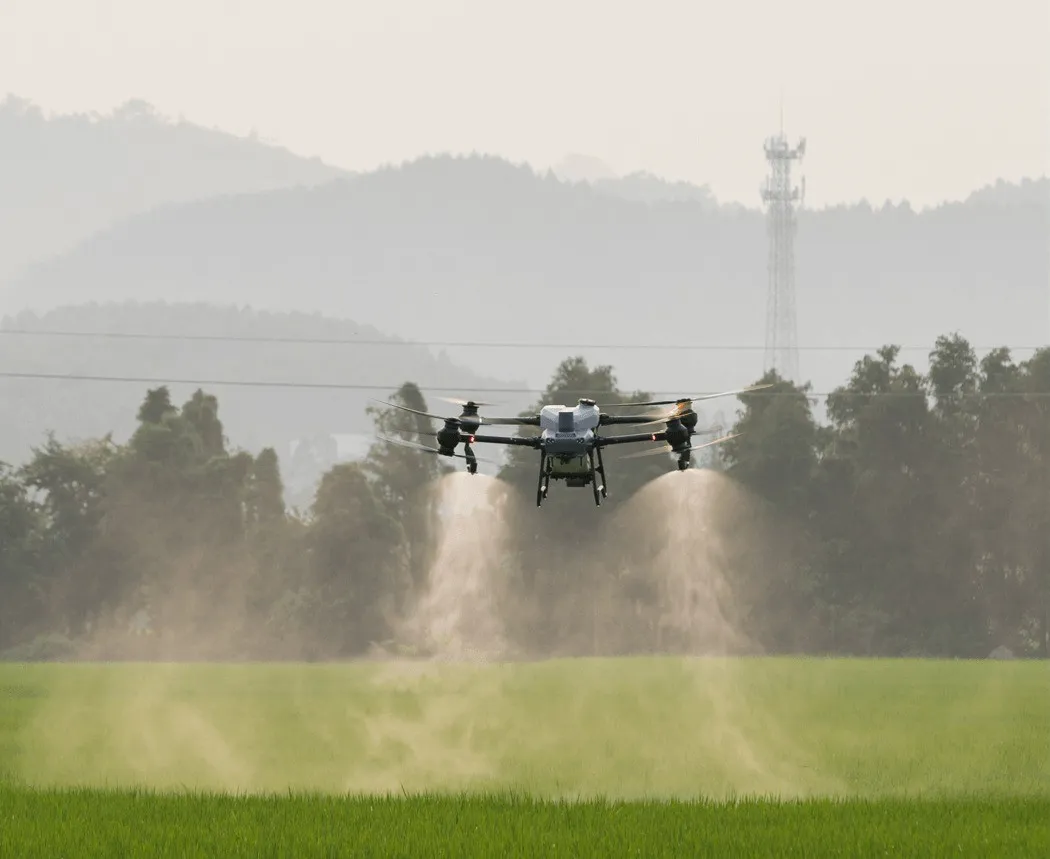
Farmers looking to take on more of their own spray-ing now have another option: spray drones. These machines are becoming more user friendly and cost effective, making them realistic alternatives to self-propelled sprayers.
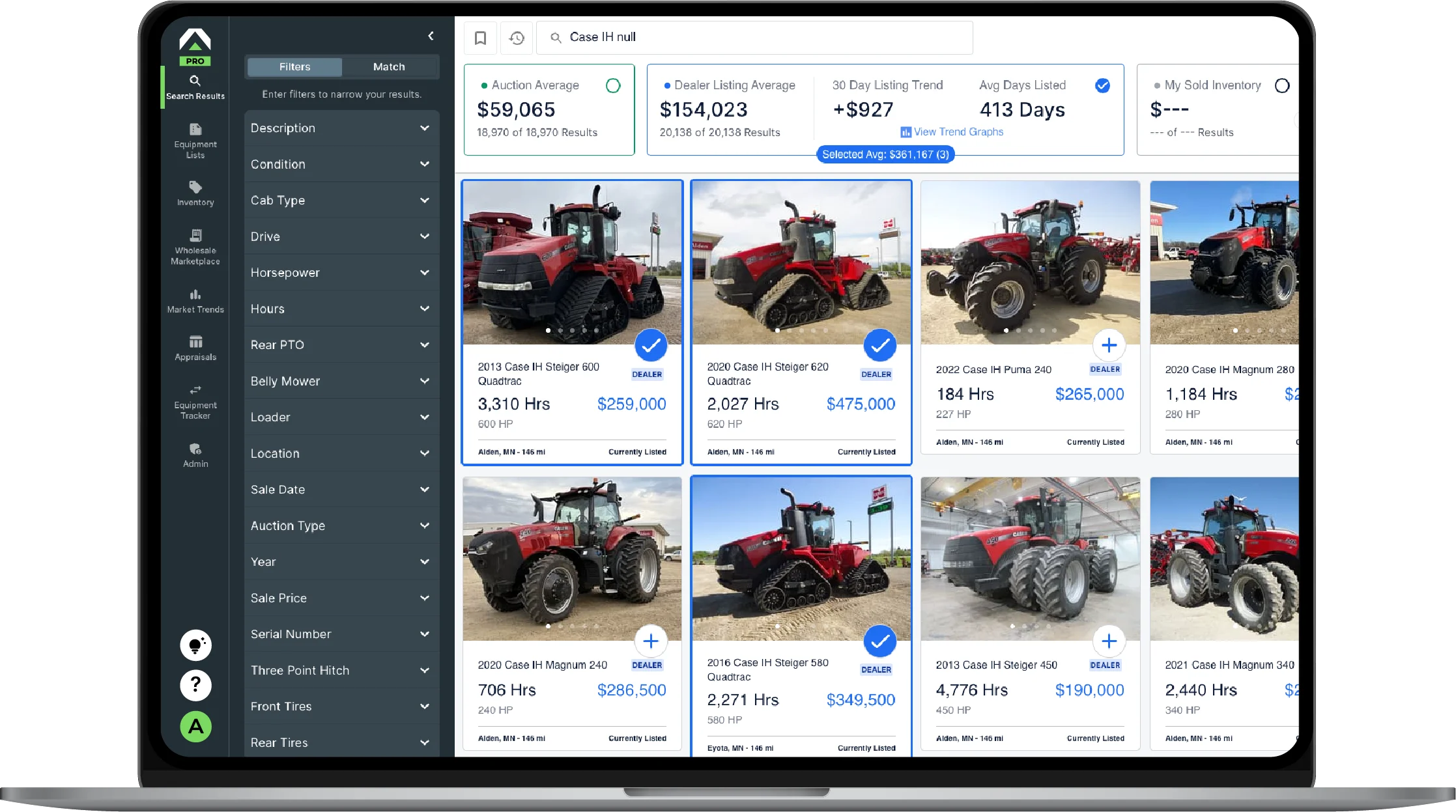
“Self-propelled sprayers have seen a steep price increase in the resale market,” said Andy Campbell, Tractor Zoom director of insights. “There are two main reasons for this: The technology has improved, and the overall width and volume have increased.”
The post-COVID “price drag” effect also continues to play a role in increased prices for new equipment, which brings the prices of used equipment right alongside, he added.
More acres are being covered by farmers doing their own spraying than in the past for several reasons, one being the yield benefit to timely herbicide and fungicide applications.
“Diseases, like tar spot and rust, have a small window of optimal application, and when you’re relying on a third party to do it, they may not be able to get to you at the right time,” Campbell said. “And it’s not a small difference. This year, I’ve heard anywhere from a 25–50 bushels-per-acre difference based on timing.”
With overall farm size increasing, it’s also easier for an operation to justify not only the cost of a self-propelled sprayer but also the cost for a qualified operator.
Recent Sales Data
Because spray drones are a fairly new technology, there haven't been many sold at auction to date. Results from Tractor House and BigIron show five recent sales, with hammer prices ranging from $7,500, for a DJI Agras T16 in Illinois, to $14,850, for an EAVision J100 in Ohio, with a large number of accessories and a generator.
Hayden Harshbarger, precision farming drone specialist for Birkey’s Farm Store, said his company sells DJI and XAG brand spray drones. He added, it’s a matter of user preference and comfort with technology when deciding which model to purchase, because pricing is comparable between the two brands.
“I compare them to Apple and Android,” he said. “It just comes down to what they can do. One brand flies a little faster and has a little larger capacity, while the other is a little more user friendly. It’s what people are used to and get comfortable with.”
Drone Pros and Cons
While spray drones can't do everything self-propelled sprayers can do, there are instances where a spray drone has distinct advantages.
“A drone isn’t rain dependent, so your field could be too wet to drive through but you would still have the ability to spray,” Campbell said. “Also, the propellers push the product you’re spraying down into the crop, which you don’t get from, say, an airplane spraying.”
Compared with the cost of a self-propelled sprayer, drones are relatively inexpensive. When you figure in the potential for increased yield due to more timely application, a spray drone may pencil out quicker in your operation than a larger piece of equipment. Depending on your area, you may even be able to pick up some custom spraying business from fellow farmers.
Harshbarger said learning to operate a drone is not complicated. “They basically fly themselves, once you set up your map and any obstacles to avoid,” he said. “You tell it how high and how fast to fly, and the rate you want, and hit Start — it does the rest.”
However, one disadvantage of spraying with a drone is its tank capacity and reliance on batteries.
“The largest and newest tank we offer holds about 26 gallons,” Harshbarger said. “That’s double the size of the previous model.”
He said the typical recommended rate of application is 2–3 gallons per acre, so each load covers around 8 acres. Battery life is about 10 minutes in the air with a full load, which doesn’t sound like much, but that will be enough to empty the tank and return to the refill station. Batteries take about 10 minutes to recharge, so he recommended having three: one in the drone, one on the charger, and one charged and ready.
The batteries also need to stay relatively cool, which can be challenging on hot summer days.
“The chargers are in a special box, with cooling fans, and they are designed with cooling fins to help keep them cool,” Harshbarger said. “On super-hot days, we recommend keeping them in the shade, or even in the air-conditioned truck, as much as possible, and to consider reducing the payload to not work the batteries quite so hard.”
Along with the drone, you need a generator to charge the batteries, and a platform to allow line-of-sight contact with the drone when it’s in the air, so some kind of trailer is useful. Harshbarger said some farmers make their own, but pre-equipped models are also available to purchase.
Licensing Requirements
Another piece of the drone puzzle some people don’t think about is the FAA-required licensing to legally operate a drone commercially.
To fly a drone of any size for recreational use, the operator must pass a test and earn a Part 107 license. This covers general knowledge of aviation, how flight works, weather, communications, and more. Training modules are available online or in person through a variety of sources, at a variety of prices from free to several hundred dollars.
“Some businesses offer to refund your money if you don’t pass the test,” Harshbarger said. “There are free online training videos, but I would be a little cautious. I recommend spending the money to make sure you understand everything and that you pass the test.”
After you’ve taken your preferred training course, you must pass a test to obtain the license. Harshbarger recommended taking the test at an in-person testing facility, but there are online options for that as well. There is a fee for the test, and licenses are good for two years before they must be renewed.
To operate a drone over 55 pounds, which would include spray drones, you also need to apply for a 44807 heavy drone exemption from the FAA.
“I tell people that when you buy a drone over 55 pounds, the FAA looks at it like you’re buying a helicopter,” Harshbarger said. “So you have to petition them and request the exemption, because you’re not actually flying a helicopter.”
Harshbarger said he works with an aviation attorney to help interested buyers draft the petition letter, and recommended seeking out third-party assistance, which Birkey’s offers, to make sure all the proper steps are followed.
Once the heavy drone exemption is granted, then a Part 137 ag use exemption is required to apply ag-related chemicals. Operators also must have their states’ applicator licensing in place, along with passing the general standards exam that covers aerial application.
The final step is to register your drone with the FAA, which requires certain paperwork and an application process. All told, the process could take upwards of six months.
You can legally purchase a drone before having all the licensing in place, but Harshbarger advised starting the process as soon as possible.
“That’s the No. 1 complaint from every customer that flies these, is that the process is not fast at all,” he said.

Join the future of ag & heavy equipment sales
Take a guided tour of Tractor Zoom Pro and Anvil Pro to discover how wider margins and faster turns are just a few clicks away.