
Bringing New Solutions to Market


Author: Lisa Schmitz | Video: Dave Olson
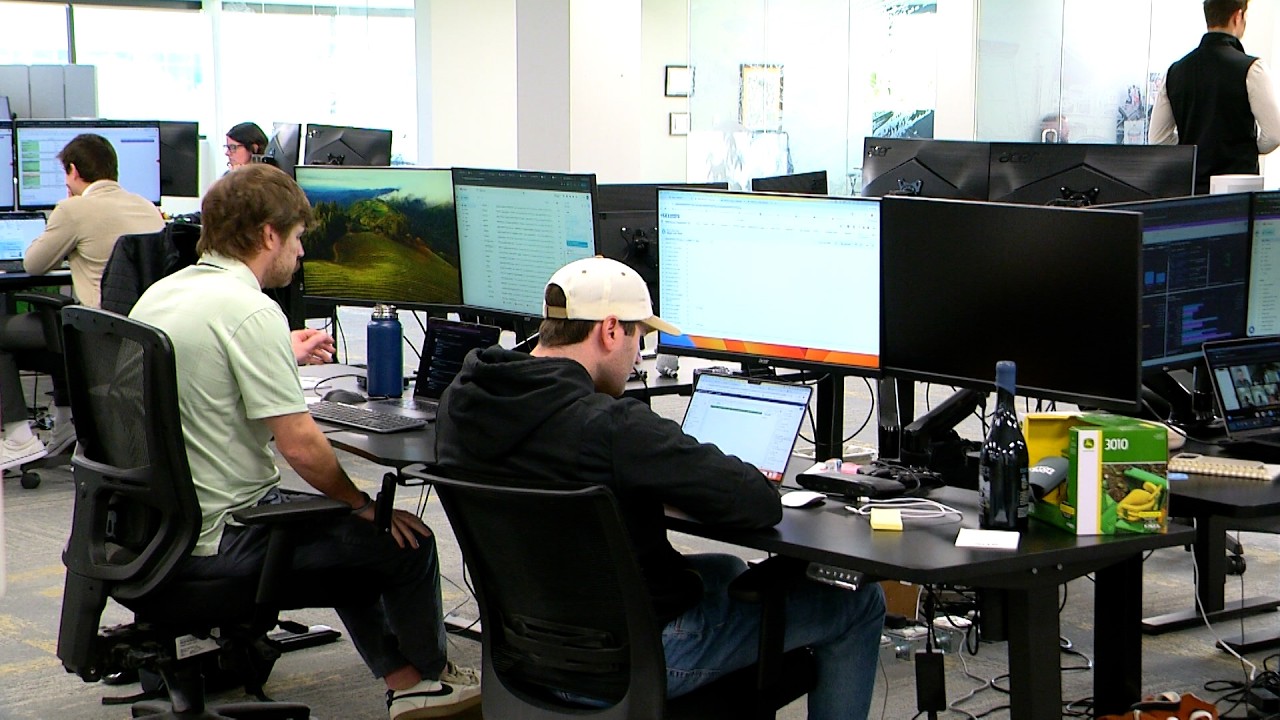
Video: Kyle McMahon, a 2013 Iowa State University graduate and ISU Startup Factory alum, is the founder and CEO of Tractor Zoom, a centralized marketplace where buyers can discover auctions and access transparent, real-time values for farming equipment.
Innovation at Work
A Thriving Entrepreneurial Community
The 2026 Innovation at Work series captures how the entrepreneurial spirit has spread across campus and the state helping launch new startups, grow small businesses and develop a future workforce with an entrepreneurial mindset.
Read more stories in the series
AMES, Iowa — Kyle McMahon didn’t set out to build one of the country’s fastest‑growing ag‑tech companies. He just wanted to buy a tractor.
But when the 2013 Iowa State graduate realized there was no reliable way to know what farm equipment was actually worth, he saw a gap big enough to build a business around.
“There was no Kelley Blue Book for tractors,” he said. “I didn’t know what I should be paying.”
That problem — a lack of transparent, trustworthy pricing — would eventually grow into Tractor Zoom, McMahon’s West Des Moines-based company that now helps value and advertise more than $20 billion in farm equipment each year.
A turning point, McMahon says, came in 2017 when he joined the third cohort of the Iowa State University Startup Factory, an 18-week incubator program at Iowa State designed to help faculty, staff, students and community members transform their breakthrough ideas into scalable businesses.
Since its launch in 2016, the ISU Startup Factory has supported 165 startups across 18 cohorts, helping founders raise more than $108 million in outside funding and achieve five successful exits, which is when founders convert their ownership into financial gains, typically through an acquisition or an initial public offering (IPO).
The 19th cohort of the program is currently underway and incorporates virtual classes along with one-on-one mentoring sessions to support entrepreneurs, who receive access to the program’s network of mentors, alumni and advisors.
“The program’s mission is to guide scientists, engineers and innovators as they learn to think like business leaders,” said Peter Hong, director of the ISU Startup Factory.
Hong also noted the ISU Startup Factory, along with ISU I-Corps, ISU Venture Mentoring Service (VMS) and the Iowa Go-To-Market (G2M) Accelerator, is part of the university’s continuum of entrepreneurship programs, which are offered at no cost to entrepreneurs.
“These programs are committed to not only educating entrepreneurs about the foundations of starting a business, but also expanding their network of business and technical advisors, potential business partners, private sector service providers and investors that would normally take years to develop,” Hong said.
A foundation built at Iowa State
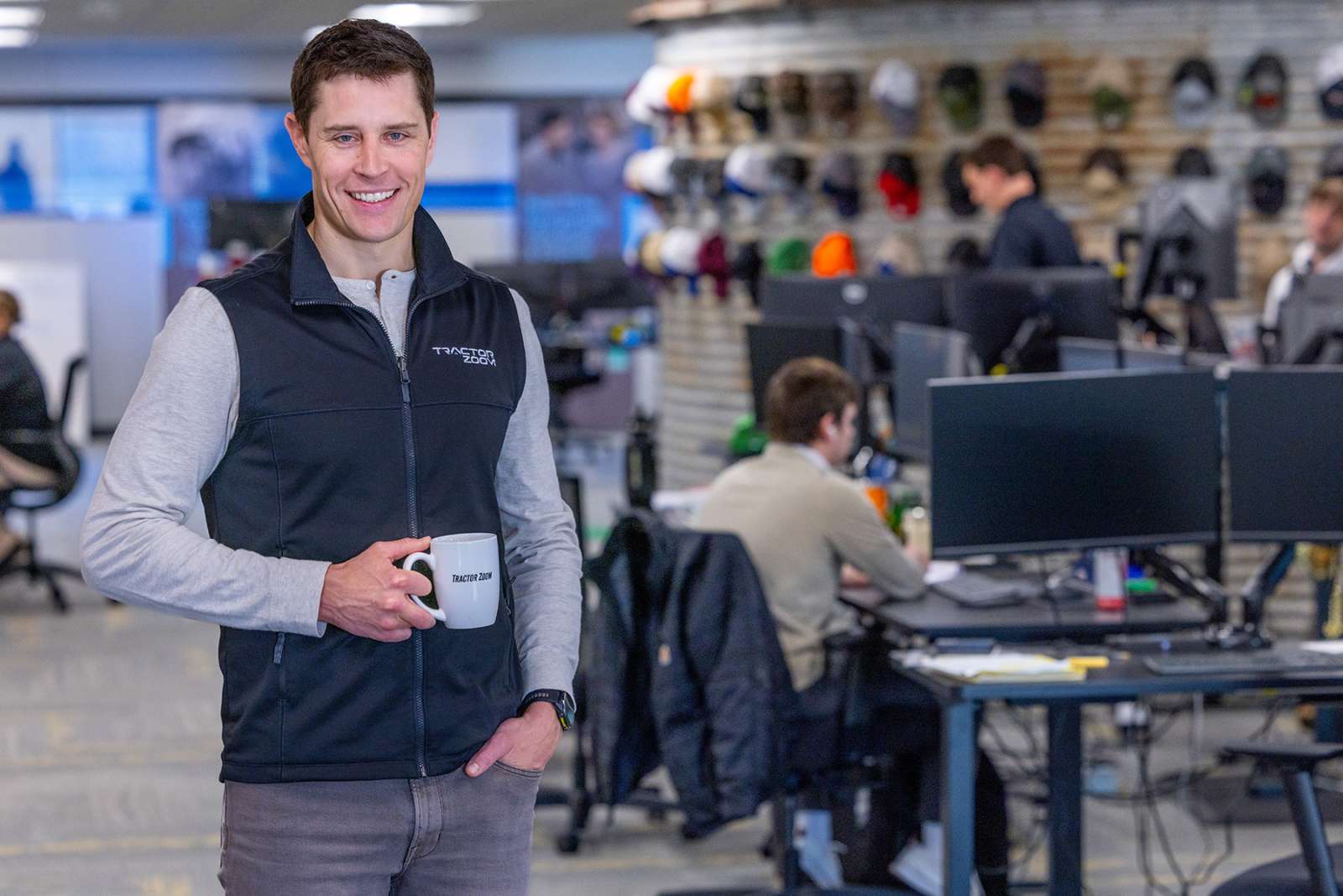
By the time he joined the ISU Startup Factory, McMahon had spent $30,000 of his own money building early software that didn’t match what the market needed.
The ISU Startup Factory, he said, helped him change that trajectory.
“At first, I probably said, ‘I don’t need help,’” said McMahon, who grew up in Fairfield. “But the program reduced my failure by 100% because it taught me about structured customer discovery. Without that, it’s pretty likely I would have built the wrong thing again.”
McMahon said the program forced him to slow down, test assumptions and talk to real customers, a process that reshaped his entire approach and prompted him to interview more than 100 farmers. These conversations helped him understand the industry’s pricing problem wasn’t just his own.

“The core challenge for everyone was that farm equipment sales aren’t public record,” McMahon said. “There was no central source of comparable sales data.”
So, he built one.
In 2017, Tractor Zoom became the industry’s first centralized auction advertising marketplace — a place where farmers could find upcoming equipment auctions and where auctioneers could reach a wider audience. In return, auctioneers reported sold prices and specifications. Tractor Zoom gained the data it needed to build accurate valuations, and the industry gained a tool it didn’t know it was missing.
Today, Tractor Zoom works with more than 750 auction companies and 2,200 dealer locations while powering 1,400 equipment stores and supporting approximately 10,000 salespeople across North America. The company currently employs about 60 people at its West Des Moines headquarters, a third of which are Iowa State alumni, McMahon said.
“The ISU Startup Factory helped give me the foundation I didn’t know I needed, and Tractor Zoom wouldn’t be what it is today without that experience,” McMahon said.
Turning a personal challenge into an assistive-tech startup

Much like McMahon, Karri Haen Whitmer was inspired to turn an idea into a company when she discovered a market gap that was especially impactful in her life.
Haen Whitmer, associate director of integrated health sciences and teaching professor and associate chair of genetics, development and cell biology at Iowa State, had been watching her young son Ethan struggle to transition between home, therapy and school following his autism diagnosis. She also had discovered there weren’t many tools available to help address this challenge.
This realization sparked an idea that would grow into Ama AI, a software program that provides AI learning companions to school-aged children with learning disabilities. While Haen Whitmer had experience developing assistive technologies, she knew turning a concept into a company would require a different skill set.
“I’ve been a professor my entire career, and the academic perspective is different from the entrepreneurial perspective,” Haen Whitmer said. “I needed to learn how to be a businesswoman.”
After completing the ISU College of Agriculture and Life Sciences’ Innovation and Entrepreneurship Faculty Fellows program, Haen Whitmer joined the ISU Startup Factory’s 14th cohort in August 2023 to refine her pitch, business model and product language.
“Getting up in front of strangers and pitching something so close to your heart is uncomfortable,” she said. “The ISU Startup Factory helped me distill a complex AI system into language people could understand. It was a really important shift.”
Ama AI — originally launched as NarrateAR — functions as an AI‑driven disability advocate that learns alongside a child, offering guidance for daily tasks, communication support and continuity across home, school and therapy. The system is now being piloted with several applied behavior analysis (ABA) therapy organizations and schools, reaching an estimated 600 young people.
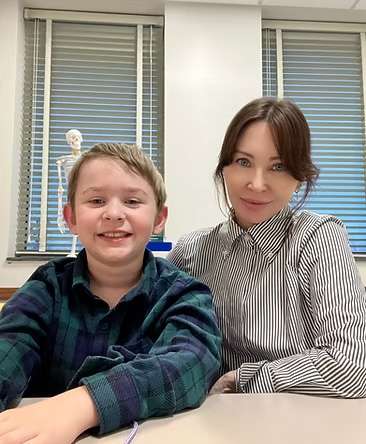
Whitmer’s son has been one of its early users. She said his reading fluency scores have significantly improved since he began interacting with the system. “There’s something really unique happening with communication,” she said. “We’re seeing that in the pilot programs, too.”
With demand growing — pilot participation has increased by about 40% month over month — the company is preparing for its first capital raise. Whitmer credited the ISU Startup Factory with helping her reach this stage.
“Iowa State has been incredibly supportive,” said Haen Whitmer, who co-founded Ama AI with her husband, Christopher Whitmer. “The ISU Startup Factory gave me the tools to take an idea born from personal experience and turn it into something that can help families everywhere.”
Whitmer was a participant in the first cohort of the ISU Startup Factory in 2016 with a previous startup, Parametric Studio, and was excited to return to the program with Haen Whitmer in 2023.
“I had a great experience in 2016, and the program has gotten even stronger and more robust since then,” said Whitmer, who continues to serve as chief technology officer at Parametric Studio.
Hannah Kirkendall, program manager for the ISU Startup Factory, said the program welcomes and encourages repeat participants, particularly if they have refined their technology or have a new business idea to explore. Applications for the program are reviewed on a rolling basis for each new cohort, with sessions beginning August and January every year.
“Entrepreneurship rarely follows a straight line, and many startup founders need more than one cycle to validate their technology, refine their business model or pivot based on new data,” Kirkendall said.
“Most importantly, the ISU Startup Factory was intentionally built for long‑term development, and offers sustained mentorship, a strong entrepreneurial community and access to advisors who support founders as their ideas evolve.”
Taking center stage
Ama AI will celebrate a major milestone during the 2026 ASU+GSV Summit for ed tech leaders, which runs April 12-15 in San Diego. Haen Whitmer was invited to speak and share Ama AI’s 5-minute pitch during the event after being selected as one of just three winning teams from around the world in the inaugural ASU Spark Center Global AI Competition.
“This is an amazing opportunity to share Ama AI with the ed tech leaders from around the world, and we were so honored to be chosen as one of the competition winners,” said Haen Whitmer, who will be joined in San Diego by her husband and son.
Ama AI is headquartered at the ISU Research Park, where Haen Whitmer and her team, which also includes software engineer Ian Bussan, a 2025 graduate of Iowa State, continue to develop the technology and expand partnerships with therapy providers and schools.
Harnessing an idea
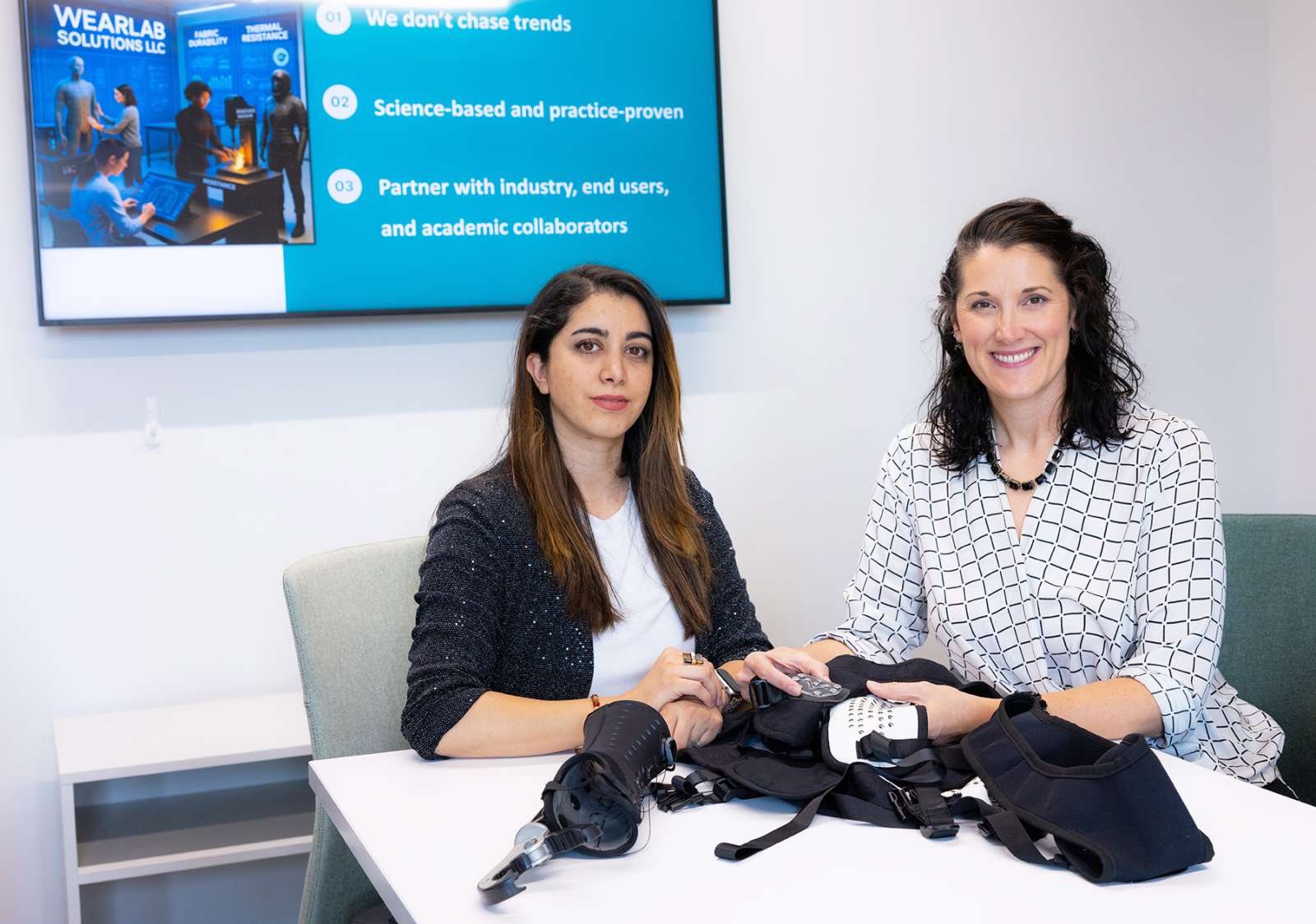
Across campus, another startup — WearLab Solutions, a problem-solving consulting firm that specializes in creating adaptive and protective clothing for high-risk professionals and medically vulnerable individuals — started with an unexpected email in the spring of 2021.
Rachel Eike, associate professor of apparel, events and hospitality management, received a message from Bob Radocy, founder of TRS (now Fillauer), a leading company in the development of high-performance, activity-specific prosthetics for individuals with upper limb loss or differences.
Radocy, as it would turn out, needed assistance to develop a technical package for a soft-goods product. Based on Eike's research expertise, he thought she might be able to help.
Eike connected him with a student, who jumped at the opportunity to complete the work and build additional experience, but she didn’t let the conversation end there.
“I was curious about his company and whether there might be room for a deeper collaboration,” she said — and there was.
It led to a redesigning of the “figure‑of‑nine” harness, a decades‑old, industry-wide webbing system used to operate body‑powered prosthetic arms. The harness, a simple nylon strap with a metal ring, hadn’t meaningfully changed since the 1960s. Users complained about discomfort, sweat and skin irritation. Many wore the harness every day; few found it pleasant.
“It didn’t take me long to say yes,” Eike said. “I knew it would be a great challenge.”
A classroom becomes a lab – and then a company
Eike decided to build the opportunity into her graduate-level functional design course, where students interviewed harness users, analyzed materials, and tested prototypes.
One student, Bahar Hashemian Esfahani, stood out. She approached the challenge with a blend of engineering logic and human empathy, and proposed a new bracket system that redistributes pressure across the back, removes the metal ring that irritated users and uses breathable materials that reduce sweat and can be easily laundered.
When Hashemian Esfahani demonstrated the prototype, Eike could see its promise. Together, they reached out to the Iowa State Research Foundation (ISURF) and Office of Intellectual Property and Technology Transfer (OIPTT) for assistance, and a provisional patent was soon in the works.
From prototype to possibility
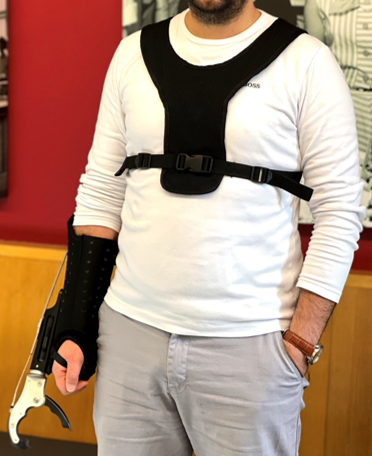
Over the next year, Eike and Hashemian Esfahani refined their new Dual-Y Nexxus™ harness and pushed the project beyond the classroom. They ran controlled simulator tests on their prototype and saw performance improvements of up to 95%.
Recognizing the potential impact, they secured a $50,000 Innovation Acceleration Fund (IAF) grant to accelerate their journey to market and applied to the regional Innovation Corps (I-Corps) program at ISU, conducting dozens of customer-discovery interviews.
Hashemian Esfahani said it was important to learn that nearly every person with upper‑limb loss begins with a body‑powered prosthetic, even if they later transition to myoelectric devices, while also discovering that most industry vendors focus on lower-body prosthetics and footwear products.
“Almost no one was innovating in the area of upper-body harnessing,” Hashemian Esfahani said.
In 2025, Eike and Hashemian Esfahani joined the 17th cohort of the ISU Startup Factory along with their WearLabs Solutions business partners (and respective husbands), Farhad Aghasi and Damon Eike.
“We used a translational research approach, with WearLabs Solutions taking shape as a functional-design venture focused on creating wearable solutions to improve people’s lives,” Rachel Eike said. “But at the same time, we weren’t sure how to fully articulate our mission and see a path to commercialization.”
The ISU Startup Factory program pushed them to refine their pitch, define their market and think like entrepreneurs while industry partners helped them redesign their prototype into a modular, in-clinic-assembled kit.
Both women also credited local entrepreneur Andrew Kirpalani, who served as an entrepreneur-in-residence during their ISU Startup Factory cohort, with helping them think like entrepreneurs rather than designers.
At Demo Day, a culminating event for each cohort where participants pitch their startup vision, Rachel Eike and Hashemian Esfahani both recalled how meaningful it was when Judi Eyles, director of the Iowa State Pappajohn Center for Entrepreneurship, told them afterward that their presentation was strong.
“That moment really stuck with us,” Hashemian Esfahani said. “The ISU Startup Factory gave us confidence and helped us believe in ourselves.”
What comes next
WearLabs Solutions is now preparing for its next major milestone: a 10‑person wear trial. A collaborator who works closely with prosthetics researchers will help them recruit participants, and once the trial is complete, they’ll be ready for the pitch they’ve been building toward since that first email — a formal presentation to Fillauer.
They don’t know what the outcome will be, Rachel Eike said, but they know they’re close.
WearLabs Solutions is still early in its journey, she said, but “we know we’ve built something that could meaningfully improve people’s lives.”

Join the future of ag & heavy equipment sales
Take a guided tour of Tractor Zoom Pro and Anvil Pro to discover how wider margins and faster turns are just a few clicks away.